The most prevalently implemented agentic AI for access and capacity in US health systems.
Products for patients, care team members, and system leaders, all running on one clinical reasoning engine.
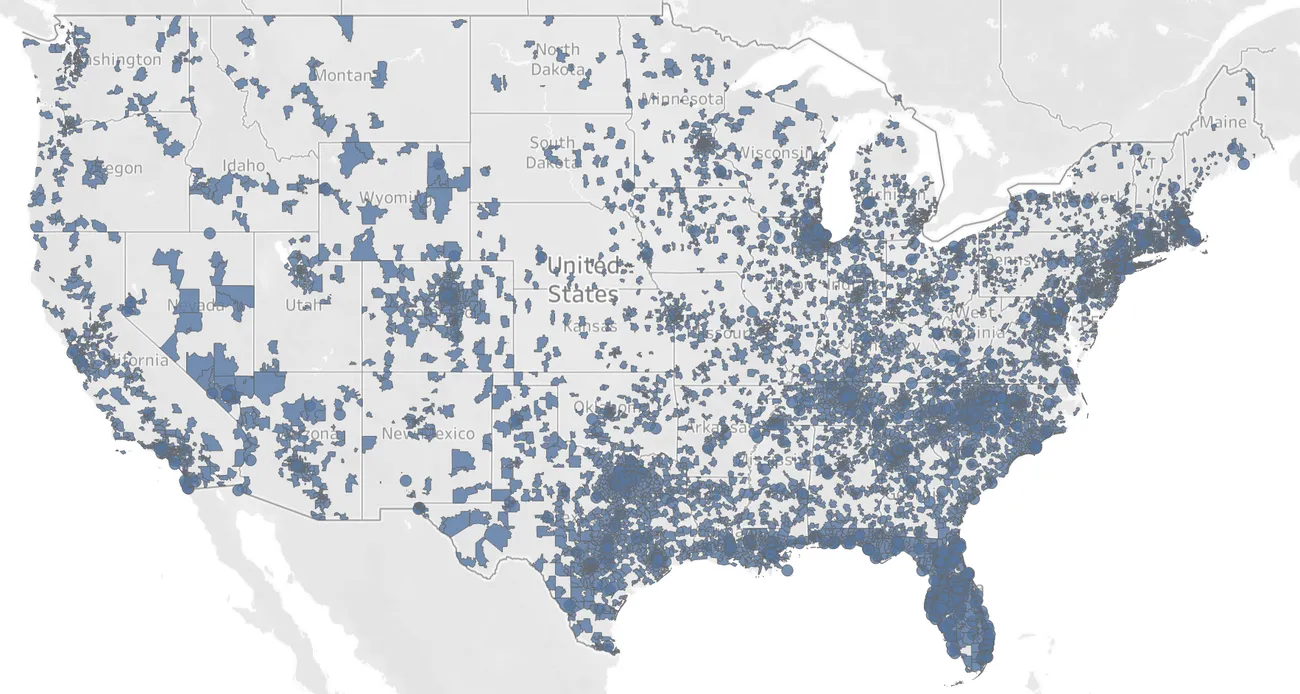
Touching patients in all 50 states
Live with health systems across the country and the Military Health System.
The most prevalent processor of patient self-reported information for US health systems.Naved et al. LLM enabled classification of patient self-reported symptoms and needs in health systems across the USA. npj Digital Medicine 8, 390 (2025).
The most prevalently implemented AI agent for clinically intelligent access and capacity.Naved and Luo. Contrasting rule and machine learning based digital self triage systems in the USA. npj Digital Medicine 7, 381 (2024).
Most patients don't know where to go
Of 22,717 patients asked where they planned to seek care, only 23% picked the right setting on their own. Clearstep redirected the rest to care that better matched their needs, in both directions.
Study published in npj Health Systems.
Why health systems use the routing engine
- Patient experienceA faster, clearer path to the right care
- Re-directionPatients routed to the optimal site of care
- Load balancingDemand spread across service lines
- Call center deflectionRoutine questions resolved digitally
- Administrative navigationRefills, billing, locations, and more
- Specialist qualificationThe right patients reach specialists
Six modules, one clinical reasoning engine
Triage, routing, scheduling, and clinical decision support across every access channel. Pick any module to open its demo.
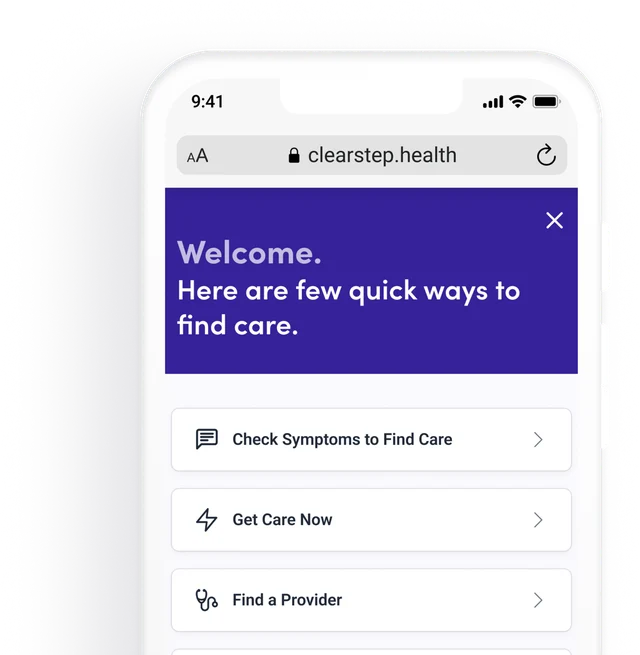
Meets patients wherever they start
White-labeled under your brand and domain, and delivered through the channels your patients already use.
Search engines
Built-in features to improve SEO under your domain and win on paid search, converting patients who are looking for care online.
Website and app landing pages
Embedded on your digital assets so existing traffic finds the best, personalized resources.
Widgets and side rails
A chat widget or side rail on any page of your website, with no redesign required.
Two-way SMS outreach
Pre-visit, post-visit, or campaign texts with a call to action to find the right care in your system.
Fits into your existing tech stack
Place Clearstep directly into your digital properties.
Host Clearstep via a lightweight widget.
Integrate Clearstep into patient portals.
Use Clearstep APIs in native apps and call center IVRs.
Clinically grounded at the core
Every recommendation follows clinical best practice, developed with Dr. Barton Schmitt, co-author of the Schmitt-Thompson triage protocols.
- Ambulance / 911
- Emergency department
- Poison center
- Labor & delivery
- Urgent care
- Primary care today, tomorrow, 3 to 7 days, 1 to 2 weeks, routine
- Dentist today, tomorrow, 3 to 7 days
- Specialist ortho, behavioral health, OB/GYN, and about two dozen more
- Telemedicine sync or async
- Retail clinic
- Self care including pharmacy-based care
15+ endpoints of care, including over two dozen sub-specialties. Triage qualifies patients down to the right provider, visit type, time slot, and modality.
Protocols trusted by 95% of US nurse call centers, used in more than 200 million call center encounters and expanded for specialty and virtual care.
Deterministic where it matters. Triage decisions run on explicit, reproducible rules. Generative AI handles the conversation, and emergency detection overrides every other rule.
Where to next?
© 2026 Clearstep Inc. Confidential. Information contained herein not to be reproduced, distributed, or excerpted.